SyntaxFlow
Tech insights · DSA · Tutorials

Insights for the Modern Developer

Deep-dives, systems architecture, coding tutorials, and the latest in tech.

Browse Categories

Latest Articles

42 articles
LeetCode 174: Dungeon Game – Dynamic Programming Explained (Top-Down & Bottom-Up)  Alternative:
Data Structures and algorithms✦ Featured

LeetCode 174: Dungeon Game – Dynamic Programming Explained (Top-Down & Bottom-Up) Alternative:

Master LeetCode 174: Dungeon Game with an intuitive Dynamic Programming approach. Learn the DP recurrence, memoization, tabulation, Python and C++ solutions, complexity analysis, and common mistakes.

CH

Chakradhar
August 2, 2026

Read article
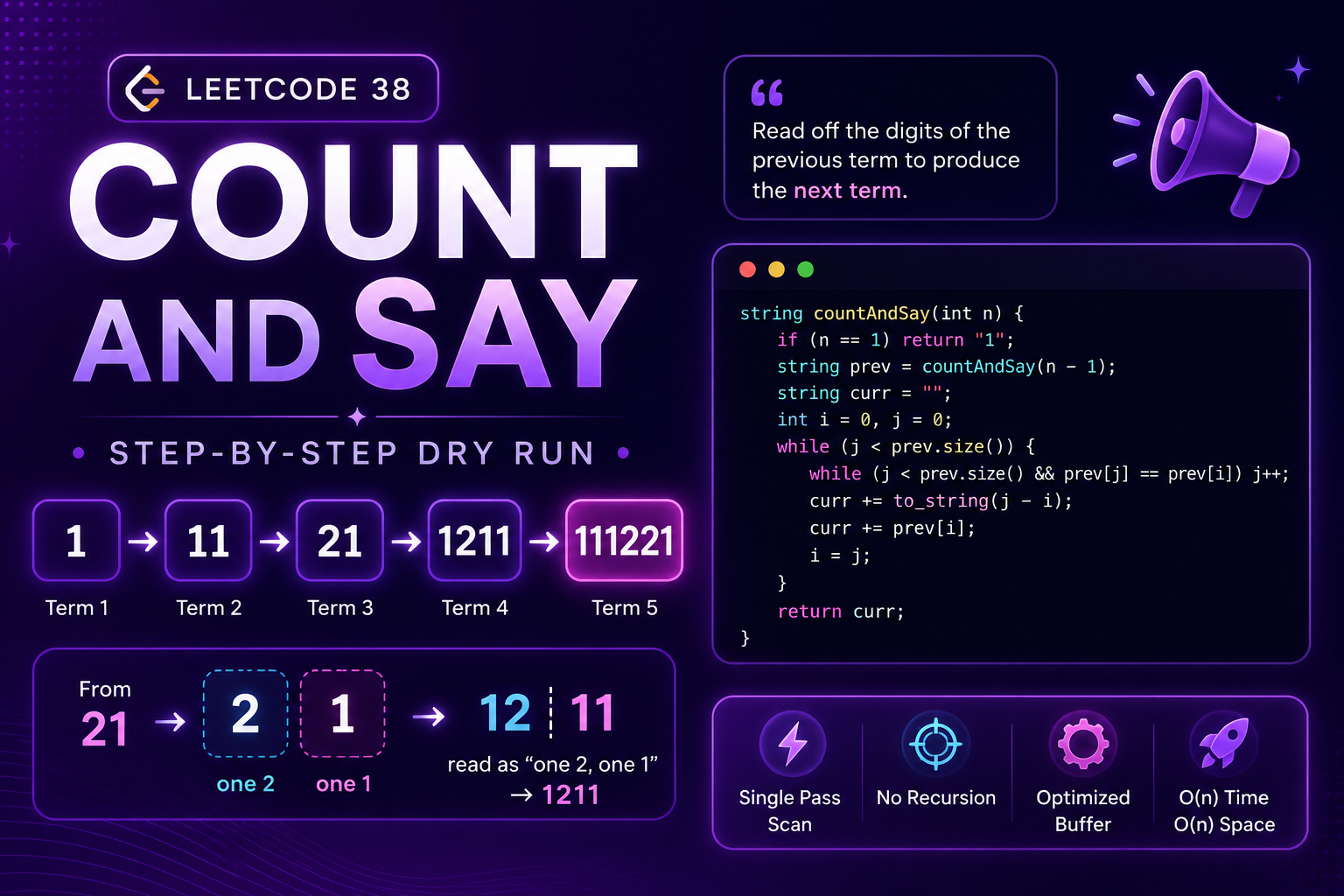
Count and Say (LeetCode 38) Explained with Dry Run, Animation & C++ Solution
Data Structures and algorithms

Count and Say (LeetCode 38) Explained with Dry Run, Animation & C++ Solution

Master LeetCode 38 – Count and Say with an intuitive explanation, step-by-step dry runs, recursive and iterative approaches, single-pass scan visualization, optimized C++ solution, time complexity analysis, and interactive animations.

#google #amazon
CH
Chakradhar
Jul 22, 2026
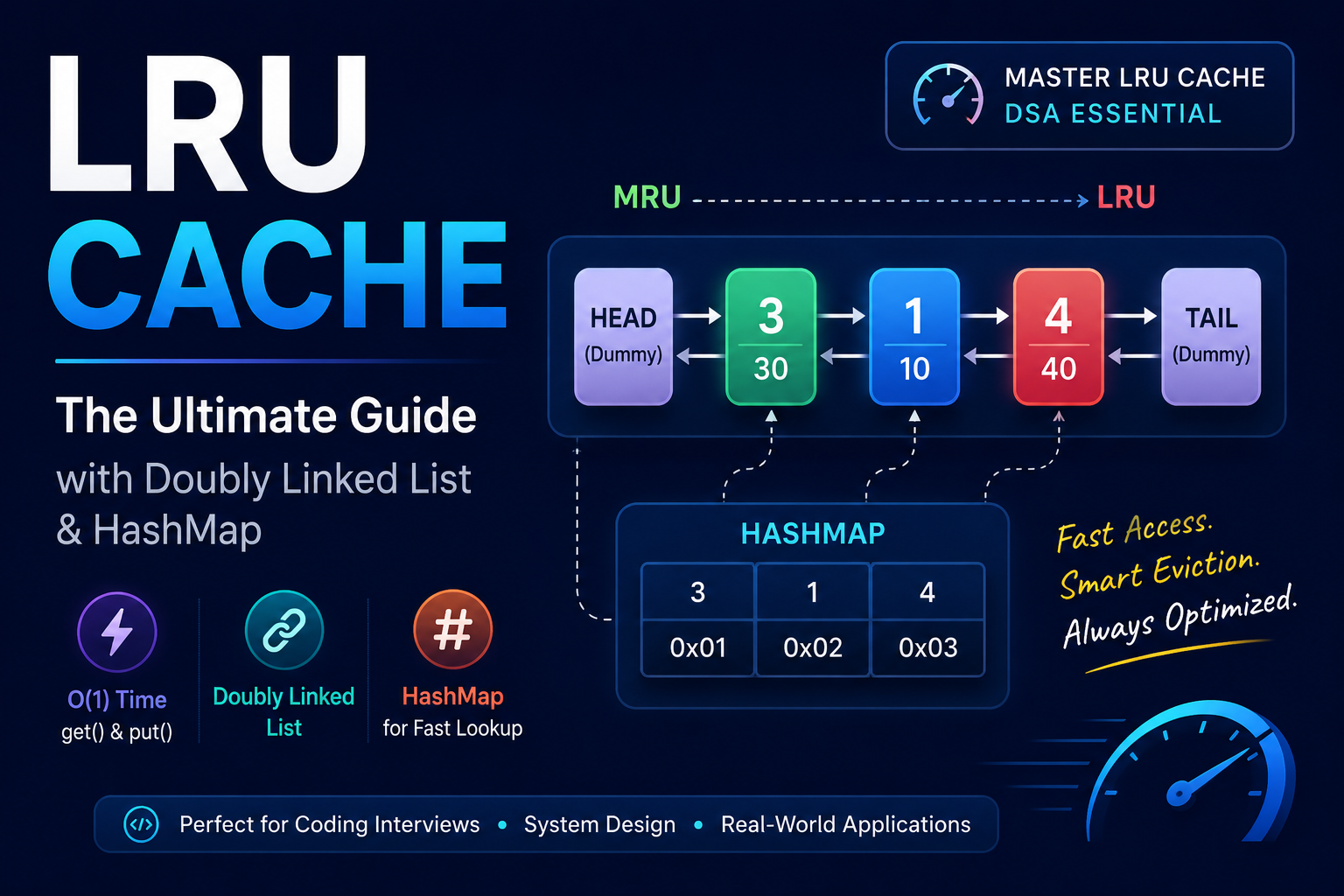
LRU Cache Explained: Brute Force to Optimal (HashMap + Doubly Linked List) | C++
Data Structures and algorithms

LRU Cache Explained: Brute Force to Optimal (HashMap + Doubly Linked List) | C++

LRU Cache is a classic "design a data structure" problem that combines a HashMap and a Doubly Linked List to achieve O(1) time for both get() and put() operations. It is one of the most frequently asked questions in coding interviews at FAANG and top product companies.

#oracle#amazon
CH
chakradhar
Jul 5, 2026
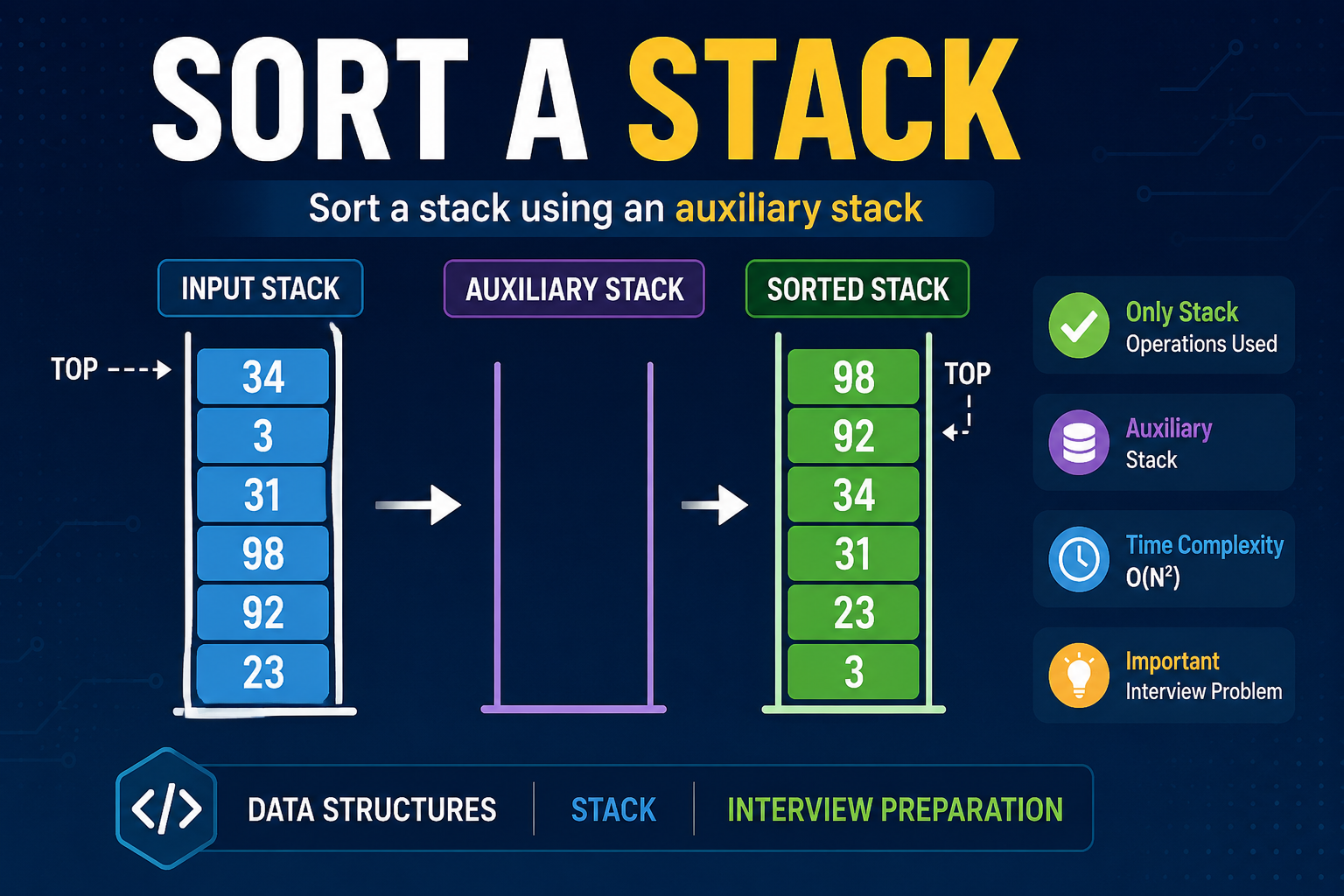
Sort a Stack  | Brute Force & Optimal Solution Explained
Data Structures and algorithms

Sort a Stack | Brute Force & Optimal Solution Explained

Learn how to sort a stack using another stack in C++. Explore the brute force and stack-only approaches with intuition, step-by-step dry runs, complexity analysis, and interview tips.

#amazon#goldman sachs
CH
chakradhar
Jul 4, 2026
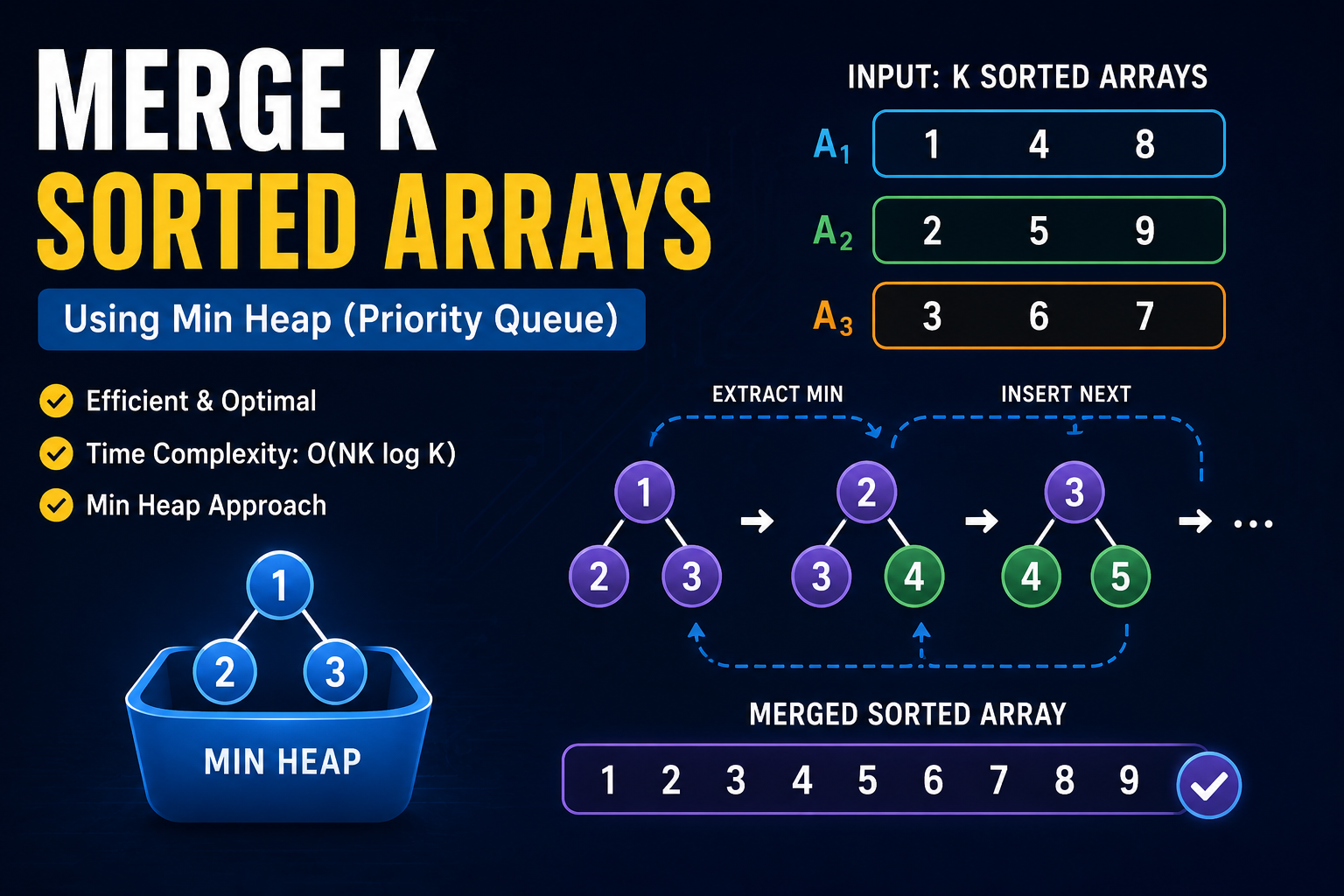
Merge K Sorted Arrays Using Min Heap (Priority Queue) | C++ | LeetCode & DSA Explained
Data Structures and algorithms

Merge K Sorted Arrays Using Min Heap (Priority Queue) | C++ | LeetCode & DSA Explained

Learn how to solve the Merge K Sorted Arrays problem using a Min Heap (Priority Queue) in C++. In this tutorial, you'll understand the intuition, dry run, heap visualization, step-by-step algorithm, complete LeetCode-style C++ implementation, and time & space complexity analysis. Perfect for coding interviews, DSA preparation, and competitive programming.

#oracle#fidelity investments
CH
chakradhar
Jul 1, 2026
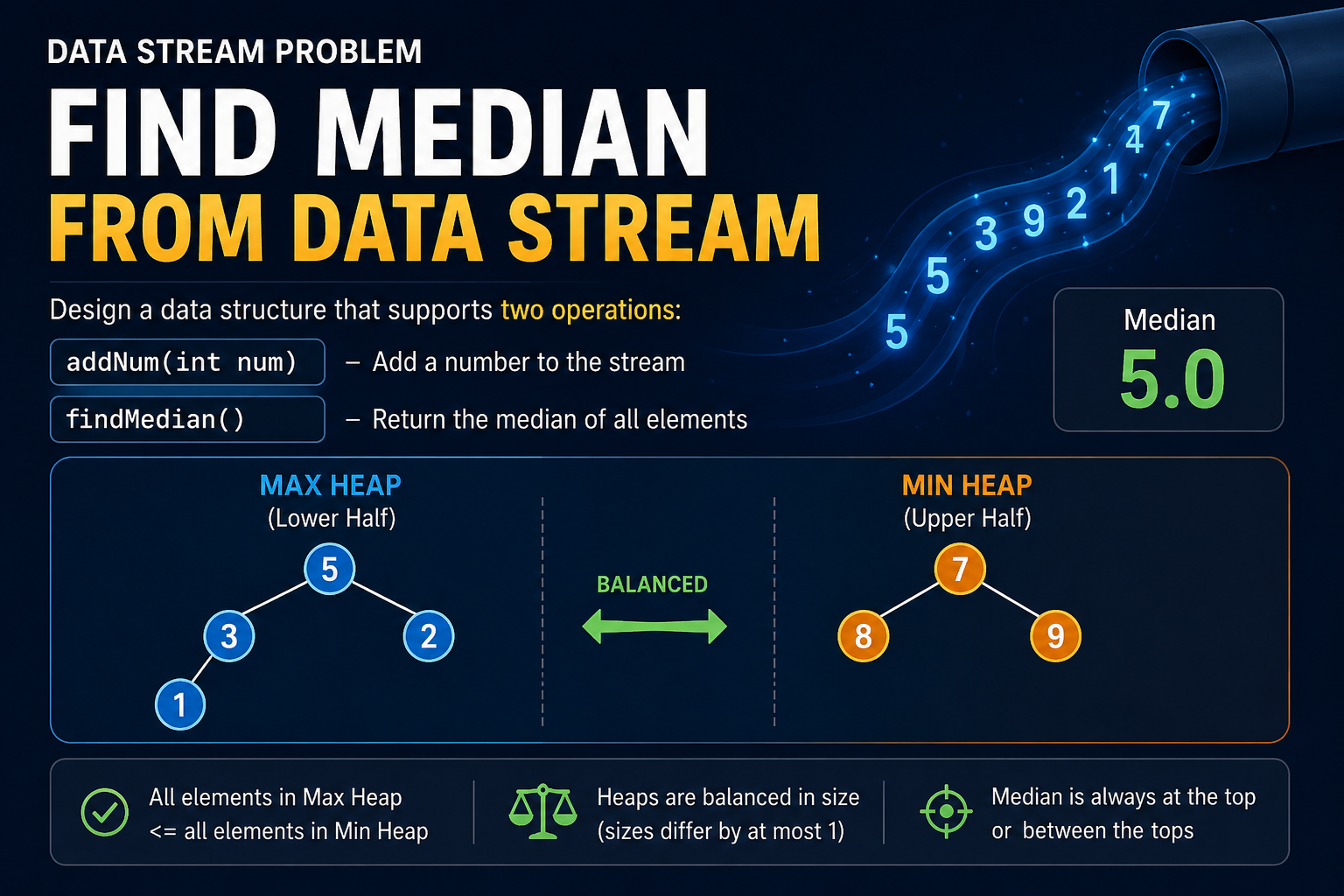
Find Median from Data Stream | Brute Force to Optimal
Data Structures and algorithms

Find Median from Data Stream | Brute Force to Optimal

Master Find Median from Data Stream (LeetCode 295) with brute force, better, and optimal two-heap solutions. Includes intuition, dry run, complexity analysis, and C++ code.

#google#meta
CH
chakradhar
Jun 30, 2026
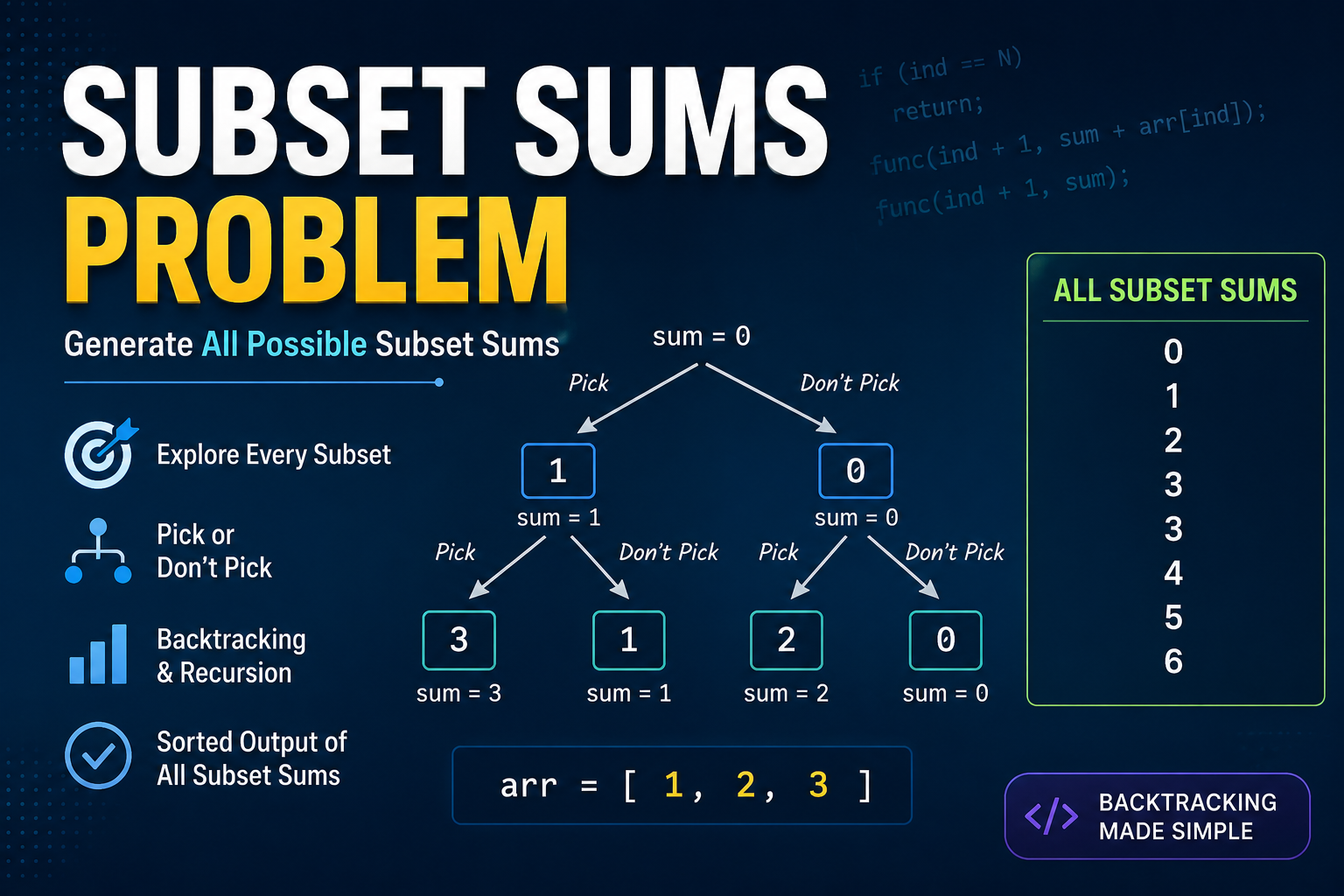
Subset Sums I: Generating All Subset Sums Using Recursion in C++
Data Structures and algorithms

Subset Sums I: Generating All Subset Sums Using Recursion in C++

Learn how to generate the sum of all possible subsets using recursion in C++. This step-by-step tutorial breaks down the "Pick vs. Skip" framework, includes a full dry run, and provides clean, optimized code for your next technical interview.

#amazon#ola
CH
Chakradhar
Jun 23, 2026
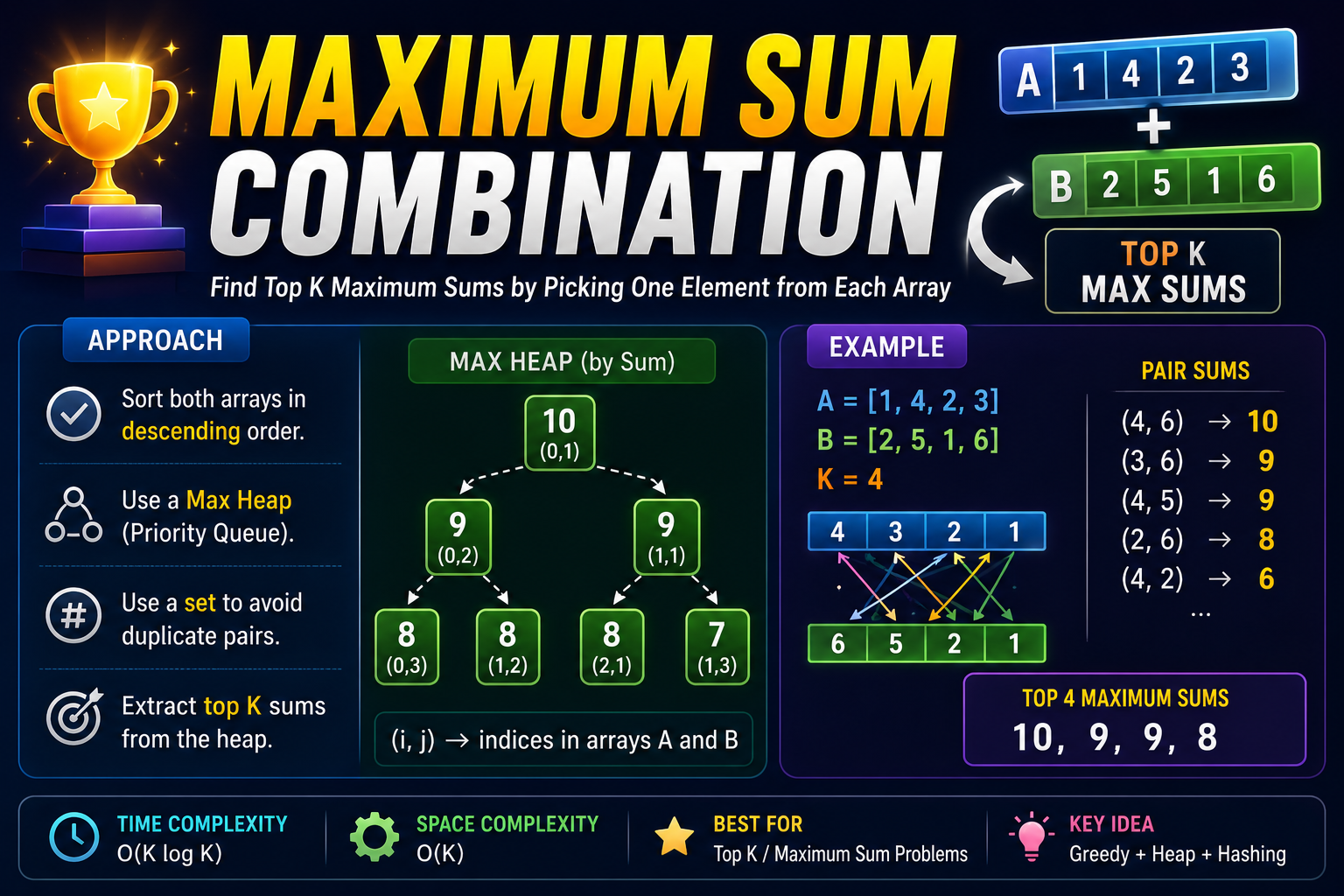
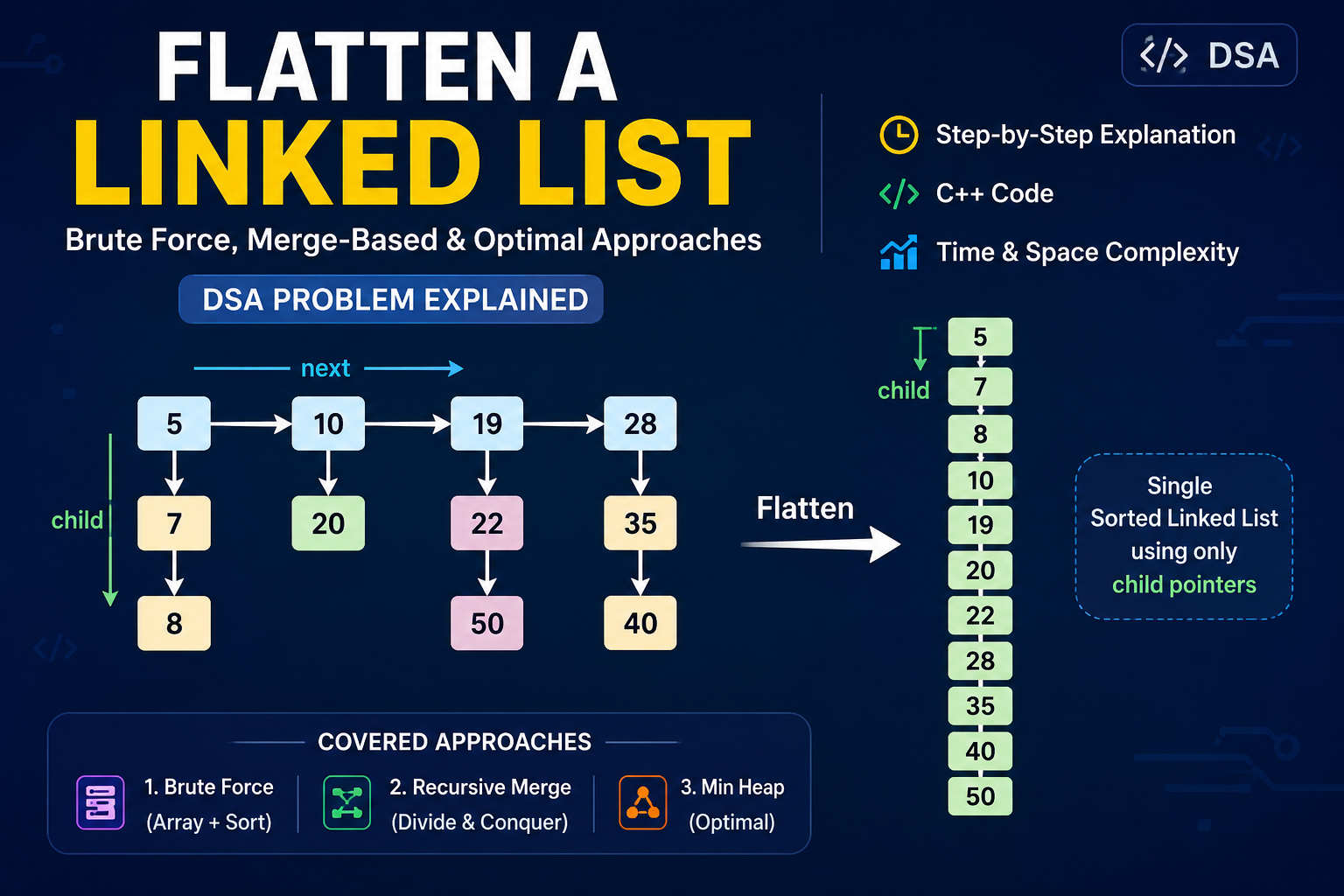
Flatten a Linked List – Brute Force, Merge-Based, and Optimal Approaches
Data Structures and algorithms

Flatten a Linked List – Brute Force, Merge-Based, and Optimal Approaches

In technical interviews at top-tier companies like Amazon, Microsoft, and Google, linked list problems are incredibly popular. They allow interviewers to evaluate a candidate's pointer manipulation skills, grasp of recursion, and capability to optimize code from a naive brute-force solution to an production-grade algorithm. Among these, Flattening a Linked List stands out as a classic problem. Unlike standard singly linked lists that form a simple linear chain, this problem introduces a two-dimensional structure that requires you to transform a complex multi-layered data structure into a single sorted linear list. In this guide, we will break down this problem from scratch. We will explore the underlying node structure, analyze the intuition behind flattening, and walk through three distinct approaches: Brute Force, Recursive Merge, and the Optimal Min-Heap technique.

#amazon#optum
CH
Chakradhar
Jun 18, 2026
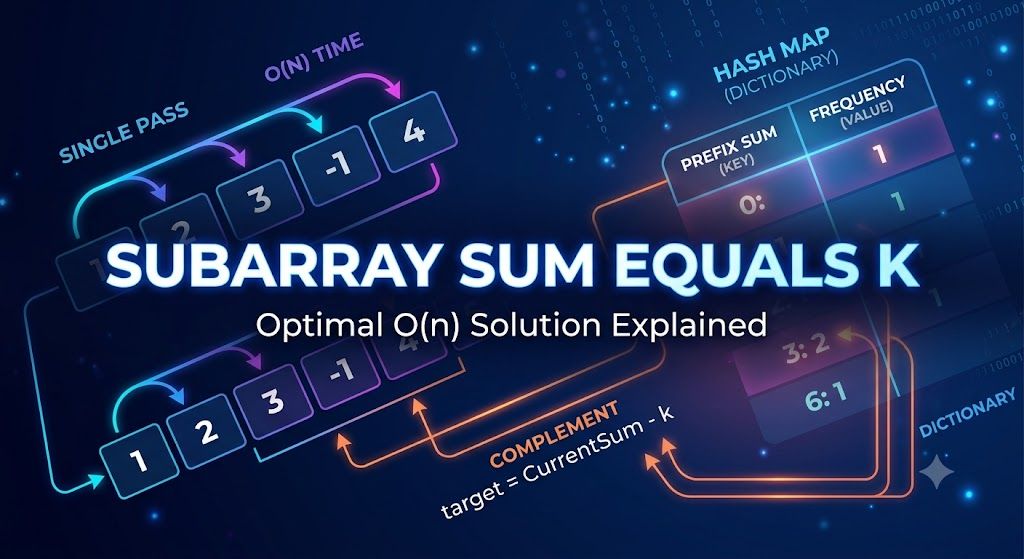
Leetcode 560 Subarray Sum Equals K
Data Structures and algorithms

Leetcode 560 Subarray Sum Equals K

Master the "Subarray Sum Equals K" problem. Learn how to solve it efficiently using the Prefix Sum and Hash Map approach with a step-by-step breakdown.

#arrays#hashing
CH
Chakradhar
Jun 11, 2026
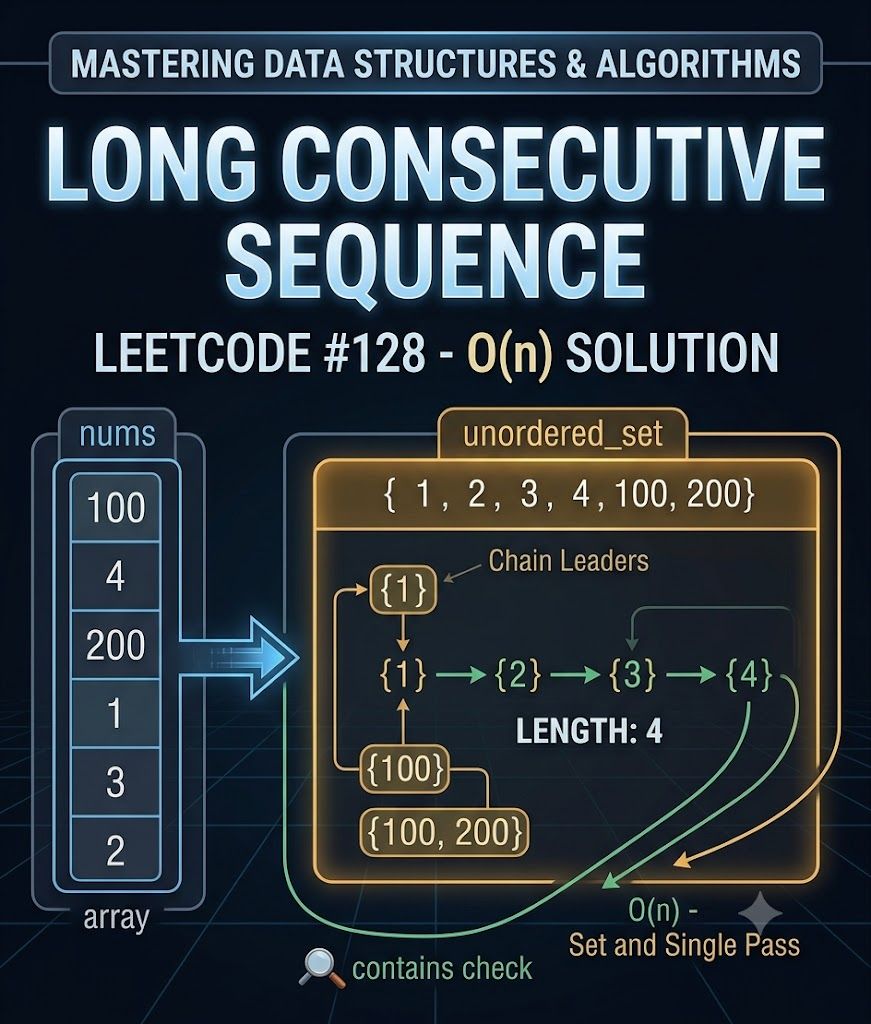
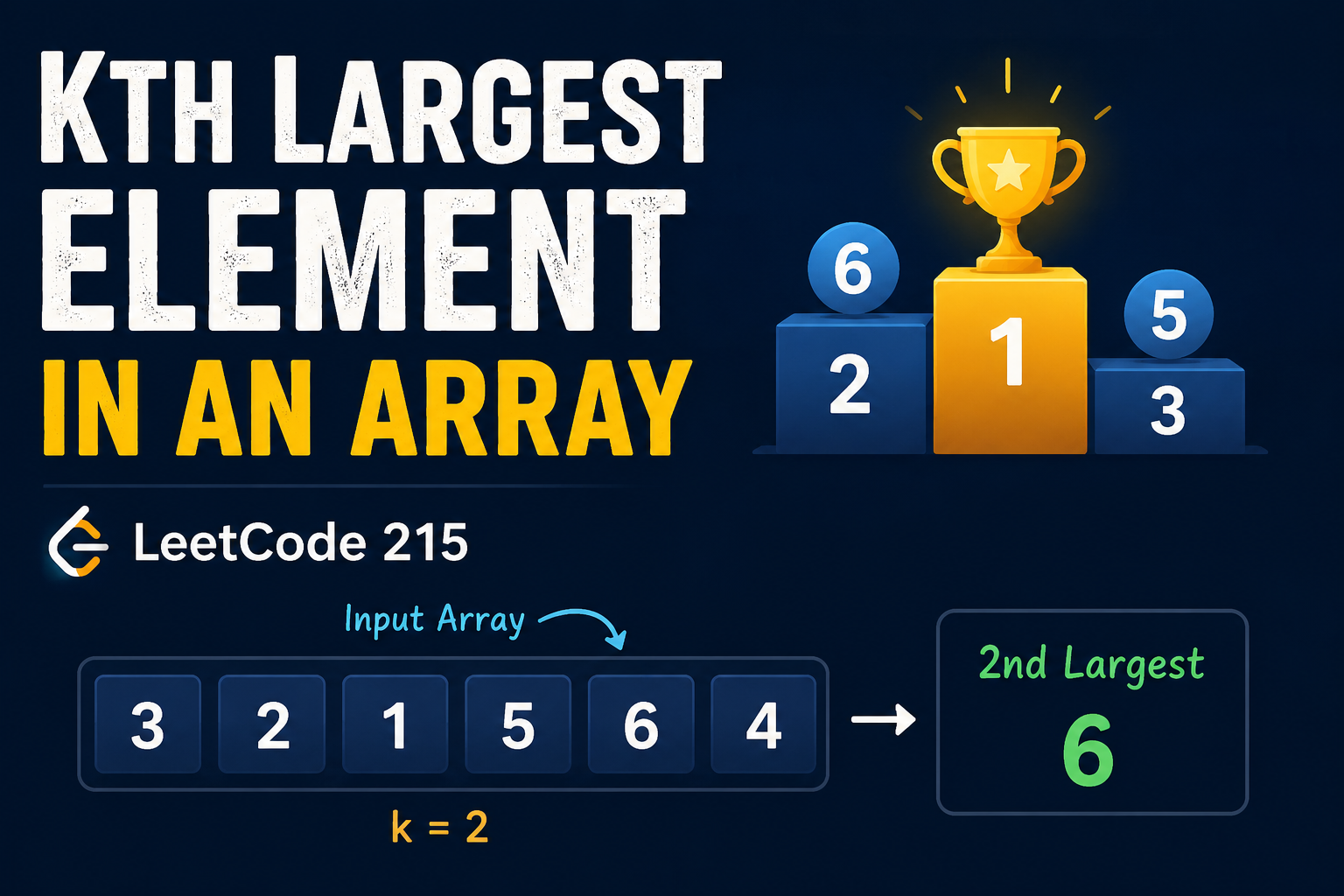
Longest Consecutive Sequence LeetCode 128 Explained
Data Structures and algorithms

Longest Consecutive Sequence LeetCode 128 Explained

Learn how to solve the Longest Consecutive Sequence problem (LeetCode 128) efficiently using an optimized O(n) Hash Set approach with step-by-step logic.

#arrays#hashset
CH
Chakradhar
Jun 10, 2026
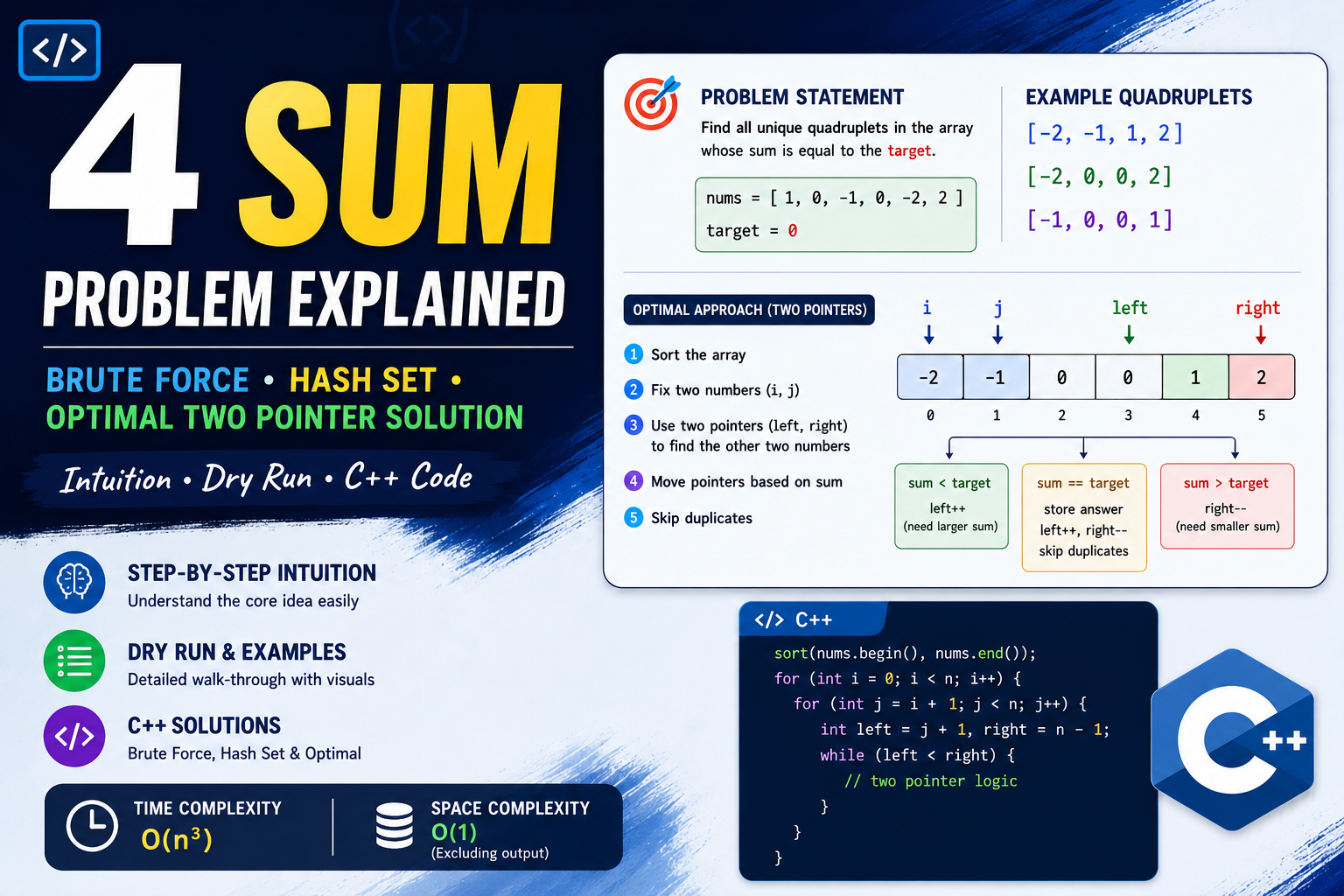
4 Sum LeetCode Solution with Intuition, Dry Run, and C++ Code
Data Structures and algorithms

4 Sum LeetCode Solution with Intuition, Dry Run, and C++ Code

Learn how to solve the 4 Sum problem using Brute Force, Hash Set, and Optimal Two Pointer approaches. Includes intuition, detailed dry runs, complexity analysis, and clean C++ code for coding interviews and DSA preparation

#arrays#hashing
CH
Chakradhar
Jun 9, 2026
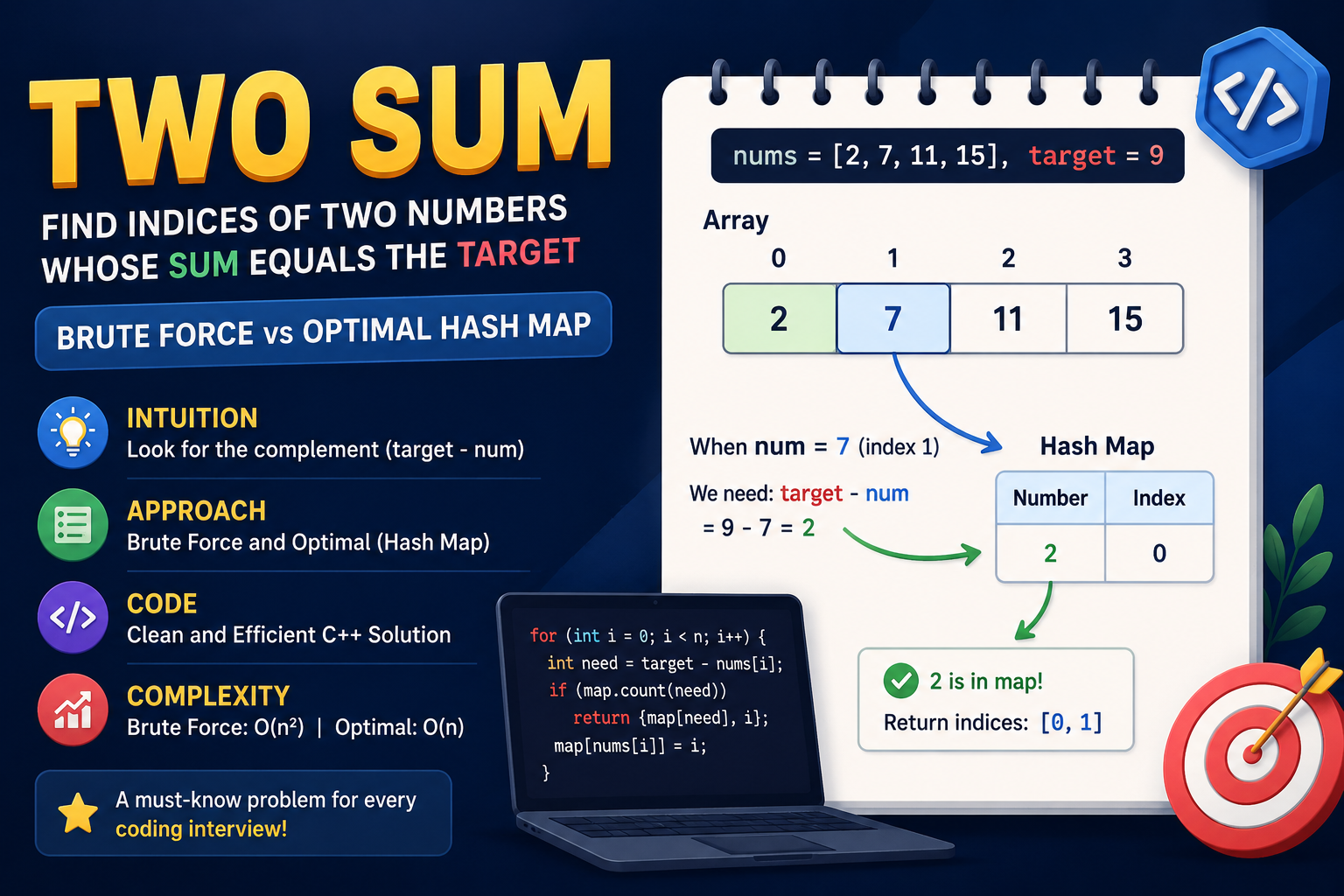
Two Sum Problem Explained: Brute Force and Optimal Hash Map Solution
Data Structures and algorithms

Two Sum Problem Explained: Brute Force and Optimal Hash Map Solution

The Two Sum problem is one of the most popular coding interview questions. Given an array and a target value, find the indices of two numbers whose sum equals the target. This article covers the intuition, brute force approach, optimal hash map solution, dry run, complexity analysis, and C++ code.

#Arrays#Hashmap
CH
Chakradhar
Jun 9, 2026
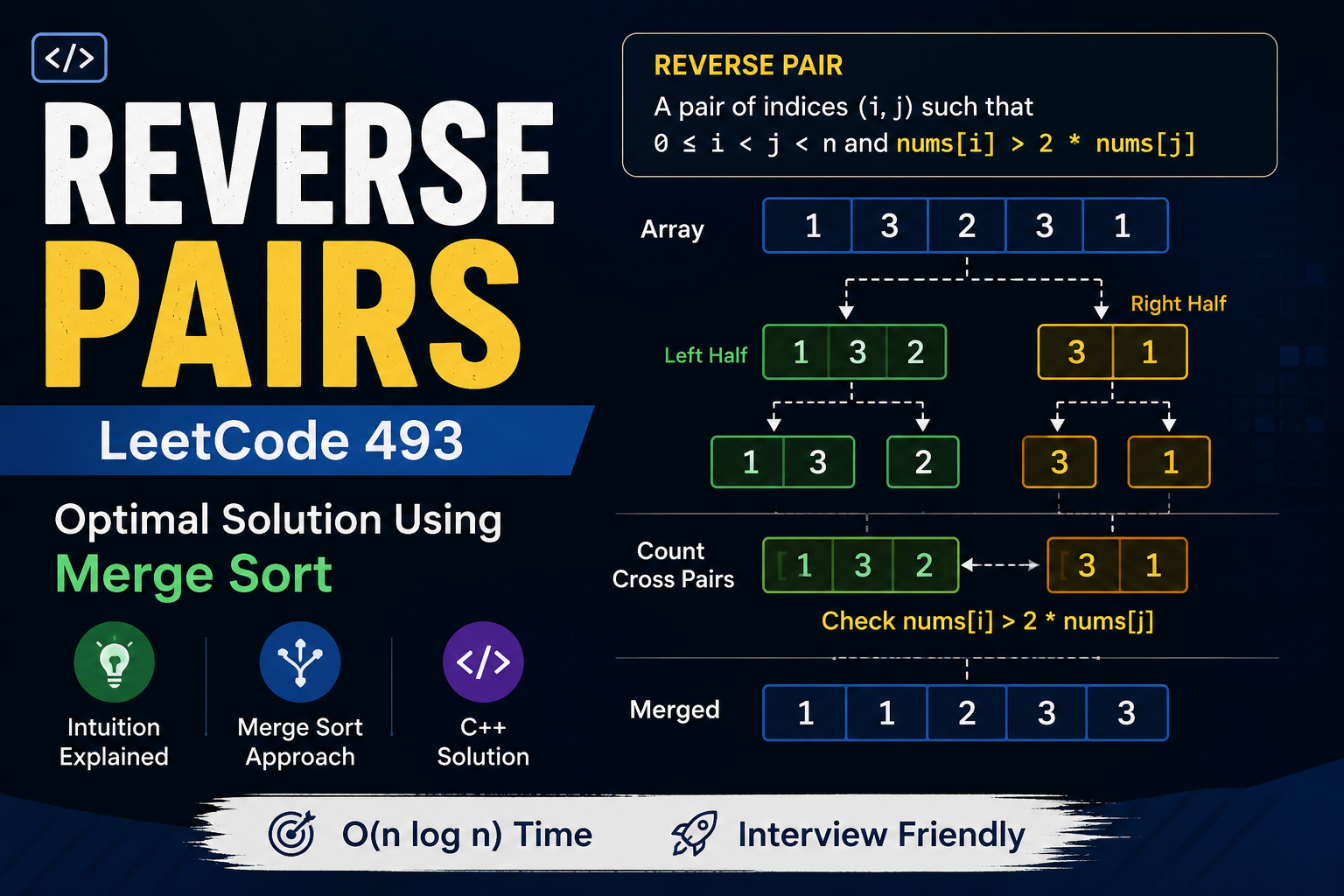
Reverse Pairs (LeetCode 493) Explained | Optimal Merge Sort Solution with C++
Data Structures and algorithms

Reverse Pairs (LeetCode 493) Explained | Optimal Merge Sort Solution with C++

Learn how to solve the Reverse Pairs (LeetCode 493) problem using the optimal Merge Sort approach. This step-by-step guide covers the intuition, brute force solution, dry run, complexity analysis, and complete C++ implementation to help you master this important interview question.

#Arrays#Divide and Conquer
CH
Chakradhar
Jun 9, 2026
Python Fundamentals: Variables, Data Types and Input/Output
Python tutorials

Python Fundamentals: Variables, Data Types and Input/Output

Start learning Python programming with simple beginner-friendly examples. This article explains Python basics including variables, data types, comments, user input, type conversion, step by step. This is episode 2 of python for aiml stay tuned for learning learn python

#python#input and output
CH
Chakradhar
Jun 8, 2026
Complete Guide to Installing Python on Windows, macOS, and Linux
Python tutorials

Complete Guide to Installing Python on Windows, macOS, and Linux

Welcome to Episode 1 of our Python for AI tutorial series! In this beginner-friendly tutorial, we will learn how to install Python on Windows, macOS, and Linux. Python is the foundation for Artificial Intelligence, Machine Learning, Automation, Data Science, and many modern technologies, so setting it up correctly is the first step in your AI journey. how to install python in windows learn python

#python#python installation
CH
Chakradhar
Jun 7, 2026